How-to
How to use a lawn edger
Published
Note: This page contains affiliate links. If you buy through them we may earn a commission at no extra cost to you. Learn more
In short
Mark the line with a taut string or a plank, then push a manual half moon edger straight down into the turf with your foot, overlapping each cut, and lift out the trimmed strip. With a powered edger or strimmer, run along the path or border with the guide wheel on the hard edge. Most gardeners mow first, then edge, then sweep up.
Products for this job
Compare all 6 productsGreenworks 40V 33 cm with edger wheel
Check price on AmazonAffiliate linkEGO ST1510T 56V: 38 cm swath, Powerload
Check price on AmazonAffiliate linkBosch AdvancedGrassCut 36: 3.1 kg, dual line
Check price on AmazonAffiliate link
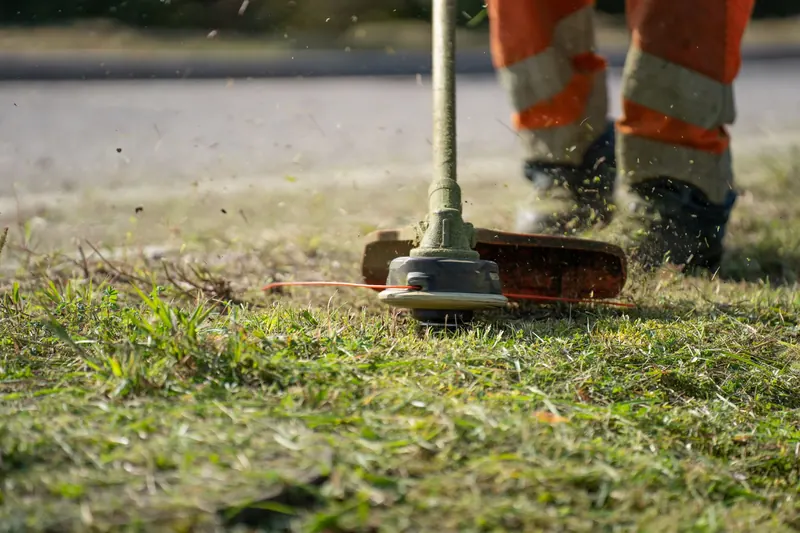
Edging is the quickest way to make a lawn look sharp. It stops grass creeping into beds and paths and gives a crisp line that the eye notices straight away. You can do it with a manual half moon edger, a powered wheeled edger or a strimmer with an edging mode. This guide explains each method step by step, how to keep the line straight or smoothly curved, how often to edge, and the safety basics. If you are still choosing a tool, our strimmer vs lawn edger comparison sets out the differences.
Before you start
Edge when the soil is moist but not waterlogged. Dry, baked soil resists the blade; sodden soil smears and crumbles. A day or two after rain is ideal in a UK spring or early autumn.
Decide where the edge should be. For straight runs, stretch a string line between two pegs, or lay a long plank on the lawn and cut against it. For curves, lay a garden hose in the shape you want and step back to check it looks right before cutting.
- Manual half moon edger, kept sharp with a file
- String line and two pegs, or a straight plank
- Garden hose for curves
- Bucket or trug for the cut strip
- Gloves and sturdy boots
Using a manual half moon edger
Do not lever soil out with the edger; it bends the blade. Keep the cut vertical so the edge stands up as a clean step. A small gutter of about a few centimetres between the lawn and the bed makes later trimming easier and stops grass rooting into the border.
A manual recut is usually needed once or twice a year, often in spring and again in autumn. In between, trim the overhanging grass with long handled edging shears or a strimmer.
- 1
Stand on the lawn side, facing along the line, with the edger's flat face towards the lawn.
- 2
Place the blade on the line, keep it vertical and press down firmly with your foot to about the blade's depth.
- 3
Rock the handle slightly to free the blade, then lift it out.
- 4
Move along, overlapping the previous cut a little so the edge stays continuous.
- 5
Once the line is cut, use a spade or the edger at an angle from the bed side to lift the loose strip.
- 6
Compost the turf strip or use it to patch thin areas elsewhere.
Using a powered edger or strimmer
A wheeled powered edger runs with one wheel on the path and the vertical blade cutting along the turf edge. Set the blade depth as the manual explains, start on the hard surface, lower the blade and walk steadily forward. Let the tool do the work and do not force it through stones or roots.
A strimmer edges by turning the head so the line spins vertically. Some models rotate the head on the shaft; others have an edger wheel. The Greenworks 40V G40LT33 in our cordless strimmer guide lists a tool free edger wheel. Run the wheel along the path edge, keep the line just touching the turf and walk at a slow, even pace.
- 1
Remove the battery and set the edging mode or wheel as the manual shows.
- 2
Put on eye protection, ear protection and sturdy footwear.
- 3
Refit the battery and start on the hard surface, not in the turf.
- 4
Walk steadily along the edge, keeping the head vertical.
- 5
Stop and remove the battery before clearing grass from the head.
Note:Wear eye protection, ear protection and sturdy footwear as listed in your strimmer's manual, plus long trousers. Keep people and pets well clear, and remove the battery before you clear the head, change line or fit a guard.
Edge before or after mowing?
Most gardeners mow first and edge afterwards. Mowing shows you exactly where the edge needs work and the mower's last pass sets the height the edge should match. Then edge, and finally sweep or blow clippings and soil off paths and back into the beds.
Some people prefer to edge first so the mower collects the trimmed grass. Either works; the important thing is to be consistent and to finish with a tidy sweep. If your mower has an edge comb or rear roller, it can cut closer to a flush path and reduce strimming. Our cordless mower and strimmer sets cover kits that share one battery.
| Task | Tool | Typical frequency |
|---|---|---|
| Recut the edge line | Manual half moon edger | Once or twice a year |
| Trim overhanging grass | Strimmer or edging shears | Every one or two mows in the growing season |
| Edge along paths and drives | Strimmer with guide wheel or powered edger | Every few weeks in summer |
Fixing common edging problems
A neat edge also pairs well with the right mowing height. See lawn mower height settings for typical heights through the year.
- Wavy line: use a string line or plank every time rather than cutting by eye.
- Edge collapsing: the cut is too shallow or the soil too wet. Cut deeper and wait for drier soil.
- Lawn shrinking over the years: you are taking a sliver off each time. Trim only the overhang with shears or a strimmer, and recut with the half moon less often.
- Strimmer scalping the lawn edge: keep the head vertical and the line just touching the turf, not angled into it.
- Line wearing fast on paving: expected when edging along hard surfaces. See strimmer line keeps breaking for fixes.
Frequently asked questions
How do you use a manual lawn edger? Mark a line with string or a plank, stand the blade vertically on the line, press it into the turf with your foot, overlap each cut and lift the loose strip out with a spade.
Do you edge a lawn before or after mowing? Usually after. Mow first, edge second, then sweep paths. Edging first also works if you prefer the mower to collect the trimmings.
Can I use a strimmer instead of an edger? Yes, for maintaining an existing edge. A strimmer with a rotating head or edger wheel trims the overhang neatly, but it cannot recut a lost edge as cleanly as a half moon edger.
How deep should a lawn edge be? Deep enough to stop grass creeping into the bed, typically the depth of a half moon blade. Keep the cut vertical so it holds its shape.
What you need
- Check price on AmazonAffiliate link
Greenworks 40V 33 cm with edger wheel
- Check price on AmazonAffiliate link
Ryobi ONE+ 33 cm mower + OLT1832 trimmer, 5 Ah