Topic
Wire-free robots
Wire-free robot mowers find their way by satellite (RTK), cameras or lidar instead of a perimeter wire. You draw the boundary in an app, but each system has its own needs.
- RTK
- Needs open sky over the antenna
- Vision
- Needs a clear lawn edge to see
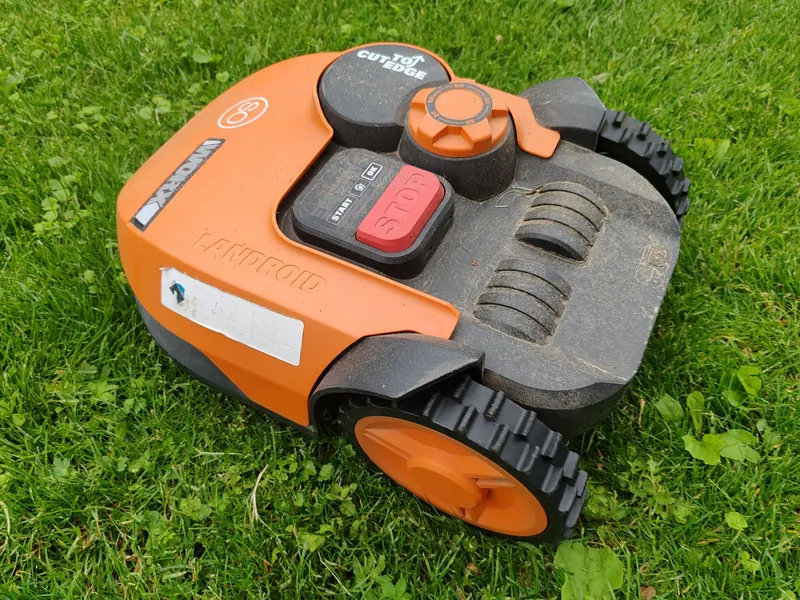
RTK models use satellite positioning corrected by a base antenna on a pole. They work best with a clear view of the sky; tall hedges, trees and walls close to the lawn can weaken the signal.
Vision and lidar models look at the lawn as they go. They suit gardens where the grass edge is clear, and some combine a camera with satellite positioning.
All of them still need a charging station with power nearby, and an app to set no-go zones, passages and mowing times.
Common mistakes
- Placing the RTK antenna under a tree or next to the house wall.
- Expecting a wire-free robot to mow narrow side passages without setting them up in the app.
Guides on this topic
- Wire-free vs boundary wire robot mowersRobot lawn mower without a perimeter wire or with one? Installation, signal needs, edge accuracy and what happens when the wire breaks or the sky is blocked.Comparison
- Segway Navimow vs Mammotion LubaSegway Navimow against Mammotion Luba: two wire-free robot ranges compared on navigation, slopes, lawn shape and how much setup each one asks of you.Comparison
- Husqvarna Automower vs Segway NavimowHusqvarna Automower against Segway Navimow: boundary wire or EPOS versus app first RTK and camera, compared by lawn size, setup effort and support.Comparison
- Husqvarna Automower vs Mammotion LubaHusqvarna Automower against Mammotion Luba: slope ratings, all wheel drive and wire-free mapping compared for hilly, complex UK gardens.Comparison
- How to set up a wire-free robot mowerSet up a wire-free robot mower step by step: placing the RTK antenna, mapping zones and no-go areas, and fixing weak signal spots by trees and walls.How-to
- How robot lawn mowers navigate: wire, RTK, vision and lidarHow a robot lawn mower knows where to cut: boundary wire, RTK GPS, cameras and lidar explained in plain terms, plus the garden features that trip each one up.Guide