Guide
Are cordless lawn mowers any good?
Published
Note: This page contains affiliate links. If you buy through them we may earn a commission at no extra cost to you. Learn more
In short
Yes, for most UK gardens. A modern cordless mower cuts a regularly mown lawn as well as a mains or petrol mower, with no cable, no fuel and little servicing. The limits are run time per charge and long, wet grass, so the key is matching the battery's watt hours and the deck width to your lawn.
Products for this job
Compare all 7 productsGreenworks 48V 41 cm: 440 m², two 4 Ah batteries
Check price on AmazonAffiliate linkMakita DLM462PT4: 46 cm, four 5 Ah batteries
Check price on AmazonAffiliate linkHayter Harrier 48 AD: self drive, rear roller
Check price on AmazonAffiliate link
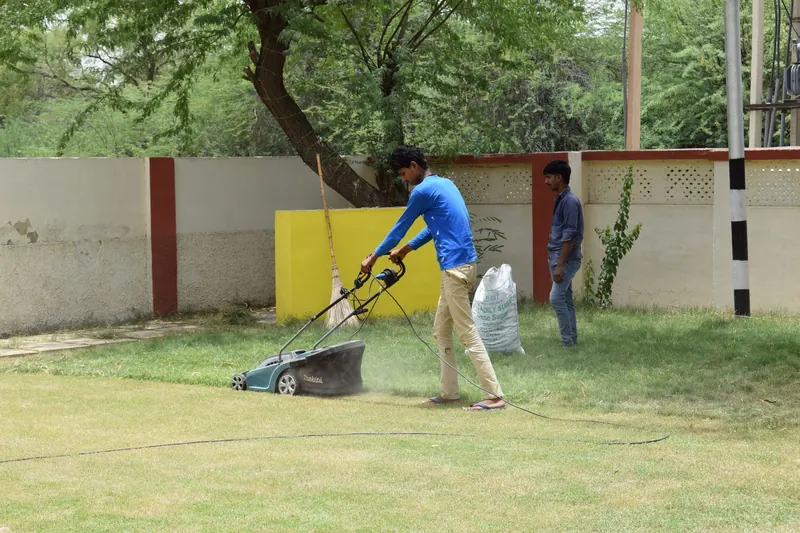
Early battery mowers earned a poor reputation: short run times, weak motors and heavy packs. That has changed. Lithium batteries, brushless motors and shared battery platforms mean cordless mowers now range from light 33 cm models for a terrace lawn to 46 cm steel deck machines that makers rate for well over a thousand square metres. They still are not right for everyone, though. This guide sets out where they match mains and petrol, where they still fall short, and how to choose one that will not let you down halfway round the lawn.
Where cordless mowers now match mains and petrol
On a lawn that is cut every week or two in dry conditions, a good battery mower gives a clean cut, collects well and can mulch. Brushless motors are common, which are efficient and need no brush replacement. Many battery mowers offer mulching or a rear roller, features once found mainly on mains and petrol models.
Convenience is where cordless clearly wins. There is no cable to drag around beds and trees, no fuel to buy and store, and no pull cord. You fit the battery and safety key, press the start control and go. Most fold flat for storage, and the same battery often runs a strimmer, blower or hedge trimmer.
- No cable to manage or cut through.
- No petrol, oil or spark plugs.
- Quieter than a petrol engine.
- Batteries shared with other tools on the same platform.
Where they still fall short
Run time is finite. A battery holds a fixed amount of energy, measured in watt hours, and long or wet grass uses it faster. If a lawn regularly needs more than one battery, you need a spare or a break to recharge, which a mains mower never needs.
Very long, rough or wet grass is the other weak point. A battery mower can cut it, but it may slow, cut out to protect the motor or clog the deck. Petrol still suits big, rough areas cut only a few times a year. Batteries also wear: over several years a pack slowly loses capacity, and a replacement adds to the cost of ownership.
What makes a cordless mower good
Look at the numbers that decide whether it will finish your lawn and cut it well. Watt hours (volts multiplied by amp hours) tell you how much energy the kit carries. The maker's rated lawn area is a useful guide, though it assumes good conditions. Cutting width sets how many passes you make, and the height range sets how long you can leave the grass.
Listings in our guides show the spread. The Ryobi OLM1833B is a 33 cm ONE+ mower with five heights from 25 to 65 mm. The Greenworks 40 V 41 cm kit is listed for about 250 m² per 2 Ah battery. The Makita DLM462PT4 runs on two 18 V batteries, comes with four 5 Ah packs and is recommended for lawns up to 1,900 m².
Wh = V x Ah, the figure that tracks run time best
- 18 V x 5 Ah90 Wh
- Twin 18 V (36 V) x 5 Ah180 Wh
- 40 V x 4 Ah160 Wh
- 56 V x 5 Ah280 Wh
| Spec | Why it matters |
|---|---|
| Watt hours (V x Ah) | Best guide to run time per charge |
| Rated lawn area | Maker's estimate of what one kit will cut |
| Cutting width | Wider decks mean fewer passes |
| Cutting height range | Lets you follow the one-third rule |
| Mulch, collect, rear roller | Clipping options and stripes |
| Self drive | Helps on slopes and with heavy decks |
Matching a cordless mower to your lawn
Measure your lawn first with our lawn area calculator. Then pick a mower rated comfortably above that area, because ratings assume dry, short grass on a simple lawn. If you are close to the limit, a second battery solves it.
For lawns up to a few hundred square metres, see our small garden cordless mower guide. For bigger lawns, our large garden cordless mower guide covers wider decks, larger packs and self drive. The best cordless lawn mower guide covers all sizes.
- 1
Measure the lawn area in m².
- 2
Choose a rated area at least a little above it.
- 3
Check watt hours and whether a second battery is included.
- 4
Match the battery platform to tools you already own.
- 5
Add self drive if the lawn is large or sloping.
Getting the best from a battery mower
Mow little and often, and mow dry grass where possible. Follow the RHS one-third rule and do not remove more than a third of the grass height in one cut; our one-third rule tool shows how to bring long grass down in stages. A sharp blade cuts more cleanly and uses less energy than a blunt one.
Look after the battery. Charge it with the maker's charger, let a hot pack cool before charging, and store packs indoors in a cool, dry place over winter. Our battery life explainer covers this in more detail.
Note:Remove the battery or safety key before you touch the blade, clear the deck or tip the mower, and wait for the blade to stop completely. Wear sturdy gloves, as the blade edge stays sharp. Never tip or lift a running mower. Charge batteries only with the maker's charger, away from heat, and stop using any pack that is swollen, cracked or very hot. If in doubt, ask a dealer or service agent.
Frequently asked questions
Is a battery lawn mower worth it? For most small and medium lawns, yes. It is quieter and easier to live with than petrol and has no cable. On very large or rough plots, check the rated area and budget for spare batteries.
How good are cordless mowers on thick grass? Good on regularly cut lawns. On long or wet grass, raise the height, take smaller cuts and expect shorter run time.
Do cordless mowers mulch? Many do, using a mulching plug or blade. Mulching works best on dry grass cut often.
How long do cordless mower batteries last? Lithium packs usually last several seasons with sensible care, gradually losing capacity rather than failing suddenly.
What you need
- Check price on AmazonAffiliate link
Greenworks 48V 41 cm: 440 m², two 4 Ah batteries
- Check price on AmazonAffiliate link
Greenworks 24V 33 cm: 8 kg, brushless
- Check price on AmazonAffiliate link
Makita DLM462PT4: 46 cm, four 5 Ah batteries